


Opera News: breaking & local
Opera
I use news apps for one simple reason: I want to understand what matters without opening a dozen websites before breakfast. Opera News takes that idea and turns it into a mobile news and magazine reader focused on a mix of global and local coverage. It is free, made by Opera, aimed at Teen users, and available for Android devices running version 6.0 or later.
My experience with it is best described as convenient rather than perfect. It is quick to open, easy to browse, and useful when I want a broad snapshot of current events. At the same time, its stream can feel busy, and anyone who wants a carefully edited newspaper-style reading experience may prefer a more focused alternative. The right choice depends less on whether you need news and more on how you like to discover it.
How I Decide Whether a News App Is Worth Keeping
Before settling on any news app, I look at four things: how quickly I can reach relevant stories, whether the selection feels varied without becoming chaotic, how much control I have over my reading habits, and whether the app earns a permanent place on my phone. A large collection of headlines is not automatically useful. If every visit becomes an endless scroll, I may see more content while remembering less.
Related News

Finding Calm in Color: The Impact of Happy Color®: Color by Number

Football League 2026: The Ultimate Mobile Sports Revolution

How Google Earth Redefines Our Global Perspective
Opera News works well for readers who prefer discovery. Instead of opening one publication and staying inside its editorial viewpoint, I can move through different subjects and follow what catches my attention. That makes it suitable for a short morning check, a quick look during a commute, or a longer browse when I want to see which stories are developing.
I also pay attention to the difference between “breaking news” and dependable context. A fast headline can tell me that something is happening, but it may not explain why it matters. I therefore treat the app as a starting point for awareness, not as my only source for major decisions. When a story affects travel, money, health, or personal safety, I prefer to open the original reporting and compare details.
Related News

Why WhatsApp Messenger Still Makes Everyday Communication Feel Easy

Jurassic World: The Game Is the Better Dino Tycoon for Strategic Players

Threads in Real Life: Who Should Join, Lurk, or Leave

How SHEIN Turned Shopping Into an Endless Content Feed

How to Make Fortnite Feel Smarter on Mobile

Should You Switch to Microsoft Outlook on Mobile?
The app’s audience size suggests that this broad approach appeals to many people. It has passed 100 million installs, with an average rating of 4.5 from around 694 thousand ratings. Those figures do not make it automatically right for me, but they do indicate that it has become a familiar option for people who want a general-purpose news feed rather than a single-publication subscription.
A practical morning routine
My most useful routine is to spend a limited amount of time scanning the main feed, then stop when I have identified the subjects worth investigating. I avoid treating every headline as an assignment. Instead, I use the first pass to separate immediate events from lighter reading and save my attention for the stories that genuinely affect my day.
This approach matters because an aggregated feed can encourage passive scrolling. If I open it without a purpose, one headline leads to another and the session becomes longer without becoming more informative. I get better results when I decide beforehand whether I am checking local developments, looking for international news, or simply filling a few spare minutes.
Gallery
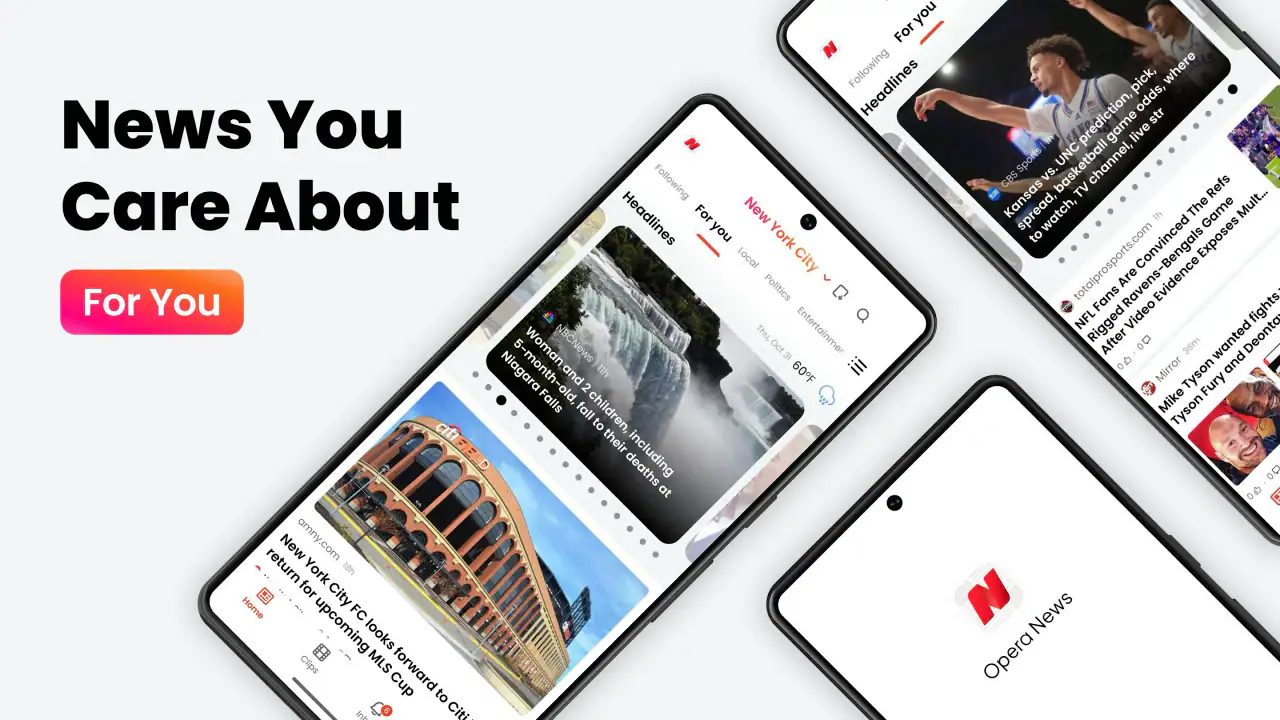
What the app feels like in everyday use
The main strength is the low effort required to begin. I do not need to decide which publication to visit first. The app puts a range of topics in front of me, so I can quickly move from a major event to a local story or a magazine-style article. That variety is especially helpful when my interests change from day to day.
Local coverage is important here. National and international headlines can dominate a news habit, but nearby stories are often the ones that affect schedules, public services, traffic, community events, and daily choices. When the local selection is relevant to where I live, the app feels more useful than a purely international reader.
There is also a psychological advantage to having one broad starting point. I am less likely to miss an unfamiliar subject simply because I do not already follow the publication that covered it. On the other hand, discovery comes with a trade-off: not every item deserves the same amount of attention, and the reader has to make that judgment.
Three habits that make the feed more useful
First, I separate scanning from reading. During a quick visit, I look at headlines and identify only a few promising items. I then open the most relevant stories one at a time instead of treating the entire feed as a reading list. This reduces the feeling that I have to consume everything displayed.
Second, I use local stories as a relevance test. If I am deciding whether to keep a broad news app, I check whether the local section regularly helps me understand my own surroundings. If it only gives me distant headlines, a regional publication may be a better fit even if this app remains useful for world news.
Third, I verify important claims outside the feed. This is not a criticism unique to Opera News; it is a sensible habit with any aggregator. A headline is designed to earn a tap, while a serious decision requires context, dates, qualifications, and sometimes the original source. I use the app to notice developments, then I slow down elsewhere when the subject deserves it.
Where Opera News Fits Better Than Other News Options
The clearest advantage is breadth without an immediate subscription decision. Because the app is free, I can try it as a general news companion without committing to a paid publication. That makes it appealing to someone who wants a wider view of current events but does not want to build a collection of separate newspaper apps.
Compared with a single publisher’s app, the experience feels less narrow. A publisher app can be better when I already trust that newsroom, want its full articles and analysis, or follow a specific editorial voice. Opera News is more useful when I want to compare subjects and discover coverage from outside my usual routine.
Compared with social media, the app gives me a more direct route into news. Social platforms can be fast, but their feeds often mix reporting with commentary, personal posts, entertainment, and arguments. Opera News is easier for a deliberate news check because I open it expecting headlines and articles rather than a general social stream.
Compared with a browser, it removes some of the friction of choosing where to begin. A browser is more flexible and better for searching a particular story, but it also leaves me responsible for finding reliable publications and managing open tabs. This app is stronger for passive discovery; the browser remains stronger for targeted research.
Its scale also helps explain why it may suit casual readers. Opera News has around 8.7 thousand reviews alongside its much larger rating total, and the overall response is strong. I read that as a sign of broad usability rather than proof that every reader will enjoy the same feed. News preferences are personal: one person’s variety is another person’s clutter.
Who should choose it
I would recommend it to someone who wants one free place to check broad current events, local developments, and lighter magazine-style material. It is particularly suitable for readers who do not want to spend time assembling a custom list of publications and who enjoy being introduced to topics they did not search for directly.
It can also work well as a secondary app for a focused reader. I might use a trusted newspaper or specialist publication for deep reporting, then open Opera News when I want a wider scan. That combination avoids asking one app to perform two different jobs.
People with older Android phones may also appreciate the relatively wide operating-system compatibility. The current version is 13.6.2254.80921, and the minimum requirement is Android 6.0. I would still judge the experience by the phone itself, because an older device can make any media-heavy feed feel less comfortable, but the compatibility range makes the app accessible to many users.
Where another option may be better
I would not choose it as my only source if I mainly want long investigations, a consistent editorial perspective, or specialist coverage. A dedicated publication app is usually easier to understand in those situations because its purpose is narrower. I also would not recommend relying on a broad feed alone for sensitive topics where context and source transparency matter more than speed.
Readers who dislike algorithmic discovery may find the variety tiring. The convenience of seeing many subjects together can become a weakness when I want a calm, predictable reading list. An RSS reader, a carefully selected publication app, or a browser bookmark folder may suit someone who wants more control over exactly what appears.
There is another trade-off for people who value a quiet reading environment. A general news stream can contain a mixture of serious and lightweight items, and the change in tone may not suit everyone. If I want every visit to feel like a structured briefing, I would lean toward a publication with a fixed front page and a clearly defined newsroom identity.
The real cost of switching
Trying Opera News is easy because it is free, but switching habits still has a cost. The main investment is attention. I need to decide whether I am comfortable with a broad stream or whether I would rather spend that time inside two or three trusted sources. Installing another app is simple; building a reliable routine around it takes longer.
I would start with a short trial rather than immediately replacing every news source. For several days, I would use Opera News during my normal morning check and note whether I find genuinely useful local or international stories. I would then compare that experience with my existing routine: Did I learn something new, or did I simply scroll more?
If the app becomes my main discovery tool, I would keep a separate method for verification and deeper reading. That could be a publication I already trust or a browser search when a headline affects me directly. This two-step workflow is more practical than expecting an aggregator to provide every layer of reporting equally well.
The app is free, which removes the financial barrier to testing it. Still, free access should not be confused with zero compromise. I exchange some editorial focus for variety, and I exchange a fixed reading list for faster discovery. Whether that is a good bargain depends on my priorities, not just on the price.
Important details before installing
Opera is the developer, and the app is listed for Teen users. That age guidance is worth considering if the phone is shared with a younger family member or if I am choosing a news reader for a household. News can change quickly and cover difficult subjects, so I would not assume that a general news feed is automatically suitable for every child.
The app was released on July 24, 2018, and its continued availability across a broad Android range makes it feel like an established product rather than a short-lived experiment. I would nevertheless keep the app updated through the normal store process, especially for a service that depends on a constantly changing stream of content.
One useful expectation to set is that the app is a reader and discovery tool, not a replacement for personal judgment. Its value rises when I use it to organize my awareness: scan, select, read, and verify. Its value falls when I allow the feed to decide every subject that deserves my attention.
My recommendation for different kinds of readers
For a casual reader who wants a free daily overview, I think Opera News is a sensible choice. It offers enough variety to make a short visit worthwhile, and its combination of global and local material gives it more practical range than a reader limited to one narrow subject.
For a news enthusiast who already follows several high-quality publications, I see it as an additional discovery layer rather than a replacement. It can help reveal stories outside a normal reading list, but I would continue using specialist sources for analysis and original reporting.
For someone who wants complete control over sources and a quiet, highly curated experience, I would skip it in favor of a dedicated publication app or a manually managed feed. The broad selection is precisely what makes Opera News convenient, but also what may make it feel less disciplined.
Overall, I recommend giving it a fair trial if your main question is, “What is happening today, both nearby and around the world?” I would not recommend it as the only answer to, “What is the most reliable and detailed explanation of this important story?” Used with that distinction in mind, Opera News is a practical free companion: quick for discovery, broad in scope, and most effective when I control how deeply I follow each headline.
FAQs for Opera News: breaking & local
What is Opera News and how does it work?
Opera News is a personalized news app designed to keep you updated with the latest headlines and local news. It uses AI to curate stories based on your interests and location. The app aggregates content from various sources, ensuring you get a comprehensive view of current events. With its user-friendly interface, you can easily navigate through different categories and customize your news feed.
Is Opera News free to use, and are there any in-app purchases?
Yes, Opera News is free to download and use. While it offers a wide range of features without any cost, it does include ads to support its free service. Currently, there are no in-app purchases, making all its features accessible without any additional charges. This ensures that users get a full experience without financial commitments.
What platforms are compatible with Opera News?
Opera News is available on both Android and iOS devices, making it accessible to a wide range of smartphone users. You can download it from the Google Play Store for Android devices and the Apple App Store for iOS devices. The app is optimized for mobile use, providing a seamless experience across different screen sizes.
How does Opera News ensure the privacy of its users?
Opera News takes user privacy seriously by implementing robust data protection measures. The app requires minimal personal information, primarily using your location to tailor local news. It follows strict privacy policies and does not sell personal data to third parties. Users can adjust privacy settings within the app to control data usage.
Can I customize the news feed in Opera News?
Yes, Opera News allows for extensive customization of your news feed. You can tailor it by selecting preferred topics, regions, and news sources. The app's AI learns your reading habits over time, offering more relevant stories. This customization ensures you receive news that aligns with your interests, enhancing the overall user experience.
Pros
- Customizable news feed
- Offline reading feature
- Fast loading times
- In-app video playback
- Localized content options
Cons
- Occasional ad interruptions
- Limited article sources
- Requires account for personalization
- Push notifications can be frequent
- Limited interactive features


